
.jpg)
Visiting a model home is one of the most exciting parts of the homebuilding journey. Walking through a finished space helps you visualize layouts, finishes, and how your future home could feel day-to-day.
But before you step through the door, a little preparation can make your visit far more productive — and less overwhelming.
Here are five simple things to do before you tour a model home.
- Have a General Budget in Mind
You don’t need exact loan approval before visiting, but having a realistic price range helps you focus on the right homes.
Keep in mind:
- Base home price
- Land (if you don’t already own it)
- Site preparation
- Foundation
- Utility connections
- Optional upgrades
Knowing your comfort range helps the sales team guide you toward homes that truly fit your goals.
- Know Where You Plan to Build
If you already own land — bring details.
If you don’t — think about where you want to build.
Important factors include:
- County or city location
- HOA restrictions
- Sloped or flat lot
- Septic vs. sewer
- Well vs. city water
Different properties can impact foundation type, delivery access, and overall cost. Even general information helps make your visit more productive.
- Make a “Must-Have” and “Nice-to-Have” List
Model homes are designed to inspire — and sometimes overwhelm.
Before you tour, think about:
- Number of bedrooms and bathrooms
- Open concept vs. defined rooms
- Office or flex space
- Kitchen layout
- Storage needs
- Outdoor living space
Having priorities written down helps you evaluate homes based on your real lifestyle — not just what looks beautiful in the moment.
- Come Ready to Ask Questions
Your model home visit is not just a walkthrough — it’s an opportunity to learn.
Good questions to ask:
- What’s included in the base price?
- What are the most common upgrades buyers choose?
- What does the build timeline typically look like?
- How does financing work?
- What site work is required?
The more informed you are, the more confident you’ll feel moving forward.
- Take Photos and Notes
After touring multiple homes, layouts can start to blend together.
Take photos (if allowed) and jot down notes about:
- What you loved
- What felt too small or too large
- Layout details you want to remember
- Features you didn’t expect to like
These small details help when comparing options later.
Final Thoughts
A model home visit should feel exciting — not overwhelming.
With a little preparation, you’ll walk in with clarity, ask better questions, and leave feeling confident about your next steps.
If you're considering building in Southwest Missouri or at the Lake of the Ozarks, our team is happy to help guide you through every stage — from first visit to move-in day.
.jpg)
Missouri communities are facing a growing need for attainable, safe housing options. Rising construction costs, limited inventory, and outdated zoning regulations are making homeownership more difficult for working families, first-time buyers, and retirees across the state.
This week, Three Stone Homes was honored to take part in legislative meetings at the Missouri Capitol to discuss practical housing solutions — and to bring those solutions directly to lawmakers.
Taking the Conversation Beyond Paper
In partnership with the Missouri Manufactured Housing Association (MMHA), we helped set up a home on-site at the Capitol so legislators could walk through a modern modular home firsthand.
Why? Because today’s homes are often misunderstood.
Seeing the craftsmanship, finishes, structural integrity, and design in person helps move the conversation beyond outdated perceptions and toward informed policy decisions.
Modern Modular vs. HUD-Code Manufactured Homes
There are two primary types of off-site construction commonly discussed:
Modular Homes (MOD)
- Built to the same state and local building codes as site-built homes
- In many Missouri jurisdictions, built to even higher code standards
- Placed on permanent foundations
- Inspected locally like traditional construction
- Appraised the same as site-built homes
HUD-Code Manufactured Homes
- Built to a federal construction standard set by the U.S. Department of Housing and Urban Development
- Among the most regulated homes in Missouri
- Inspected at the factory and subject to Missouri Public Service Commission oversight
- Placed on permanent or approved support systems
- Often one of the most affordable paths to homeownership
Both options provide safe, durable, energy-efficient housing built under strict construction and inspection standards
Addressing Common Myths
Outdated perceptions continue to shape local zoning decisions across Missouri. However, the reality is very different.
Myth: Manufactured and modular homes are lower quality.
Reality: These homes are built with modern materials in climate-controlled factory environments, which increases consistency and efficiency. They are subject to rigorous inspections and oversight
Myth: These homes hurt surrounding property values.
Reality: Properly placed homes that meet design and installation standards do not negatively impact values. Modular homes are appraised the same as site-built homes
Myth: Expanding placement removes local control.
Reality: Updating zoning ordinances to reflect modern construction methods does not eliminate local authority. It simply removes artificial barriers and provides more flexibility for communities
The Affordability Impact
Factory-built housing can significantly reduce construction timelines and costs.
- Modular homes can reduce construction costs by approximately 20% compared to site-built construction.
- HUD-code manufactured homes can provide savings of 40% or more compared to traditional site-built homes
In a time when affordability is one of the biggest barriers to homeownership, expanding access to these options matters.
Our Simple Ask
Our message to legislators was straightforward:
Treat modular and manufactured homes the same as site-built homes.
Do not create artificial barriers that limit placement or opportunity for Missouri families.
When zoning regulations restrict where these homes can be located — not based on quality, but on outdated classifications — buyers are left with fewer choices, higher prices, and longer timelines
Moving Forward
We are grateful for the opportunity to engage in thoughtful conversations with policymakers about expanding housing opportunities across Missouri.
Affordable housing solutions do not require lowering standards. They require updating policies to reflect modern building methods.
At Three Stone Homes, we remain committed to building safe, high-quality homes — and to advocating for policies that expand opportunity for the families we serve.
Coming Soon to Lake of the Ozarks
Three Stone Homes will be serving the Lake of the Ozarks, providing manufactured and modular homes for primary residences, second homes, and lake-area living.
Building at the lake comes with unique considerations — from land access and site preparation to delivery coordination and local placement requirements. Our team helps guide buyers through the process so they know what to expect and can plan with confidence.
Homes Designed for Lake-Area Living
We offer a range of manufactured and modular home options that can be tailored to fit a variety of land types and lifestyle needs. Whether you’re building a full-time residence or planning a future lake retreat, we help you evaluate options that align with your property, budget, and long-term goals.
Guidance from Start to Finish
Our team works with buyers to:
-
Review land and site considerations
-
Coordinate delivery and placement logistics
-
Provide clarity around manufactured vs. modular construction
-
Answer common questions specific to lake-area builds
Let’s Talk About Your Lake Project
If you’re considering building in the Lake of the Ozarks area, we’re happy to help answer questions and walk through what to expect.
Contact us today to get started.
.jpg)
Building a Home Shouldn’t Feel Uncertain
Building a home is one of the biggest investments most people will ever make. Yet for many buyers, the process can feel confusing, overwhelming, or unclear — especially when expectations around costs, timelines, and communication don’t match reality.
That’s where transparency makes all the difference.
When builders are open, honest, and proactive, the entire experience becomes smoother, more predictable, and far less stressful. Here’s why transparency matters — and what it should look like throughout the homebuilding process.
- Clear Costs Build Confidence
One of the biggest fears homebuyers have is unexpected expenses. Vague pricing or unclear estimates can quickly lead to frustration and mistrust.
Transparency means:
- Clearly explaining what’s included in the home price
- Outlining potential additional costs (site prep, utilities, foundations, permits)
- Helping buyers understand where flexibility exists — and where it doesn’t
When costs are explained upfront, buyers can budget realistically and make informed decisions with confidence.
- Honest Timelines Set Realistic Expectations
Every build follows a timeline, but delays can happen — especially when weather, site conditions, or permitting come into play.
Transparency doesn’t mean promising perfection. It means:
- Providing realistic timelines from the start
- Explaining what factors can affect the schedule
- Communicating changes as early as possible
Clear expectations help buyers plan their lives — from housing transitions to moving dates — without unnecessary stress.
- Ongoing Communication Reduces Stress
Even with clear pricing and timelines, communication is what keeps everything on track.
Transparent builders:
- Keep buyers informed throughout the process
- Answer questions clearly and promptly
- Explain next steps instead of leaving buyers guessing
Knowing who to contact and what’s happening next gives buyers peace of mind and a sense of control throughout the build.
- Transparency Builds Trust — and Better Outcomes
When communication is open and expectations are clear, trust naturally follows. Buyers feel more comfortable asking questions, voicing concerns, and participating in decisions that shape their home.
That trust leads to:
- Fewer misunderstandings
- Smoother decision-making
- Stronger builder–homeowner relationships
Ultimately, transparency benefits everyone involved.
What Transparency Looks Like at Three Stone Homes
At Three Stone Homes, transparency is a core part of how we work with buyers. From the first conversation, our team focuses on clear explanations, realistic expectations, and consistent communication.
We help buyers:
- Understand the full picture — not just the home itself
- Navigate costs, site prep, and timelines before surprises arise
- Feel supported and informed from first visit through move-in
Our goal is simple: no confusion, no guesswork, and no unanswered questions.
Final Thoughts
A well-built home starts with a well-communicated process. Transparency around costs, timelines, and communication isn’t just helpful — it’s essential to a positive homebuilding experience.
When you work with a builder who values honesty and clarity, you gain more than a home. You gain confidence in every step along the way.
Ready to build with clarity and confidence? Visit our display centers in Rogersville or Harrisonville to learn more about the Three Stone Homes process.
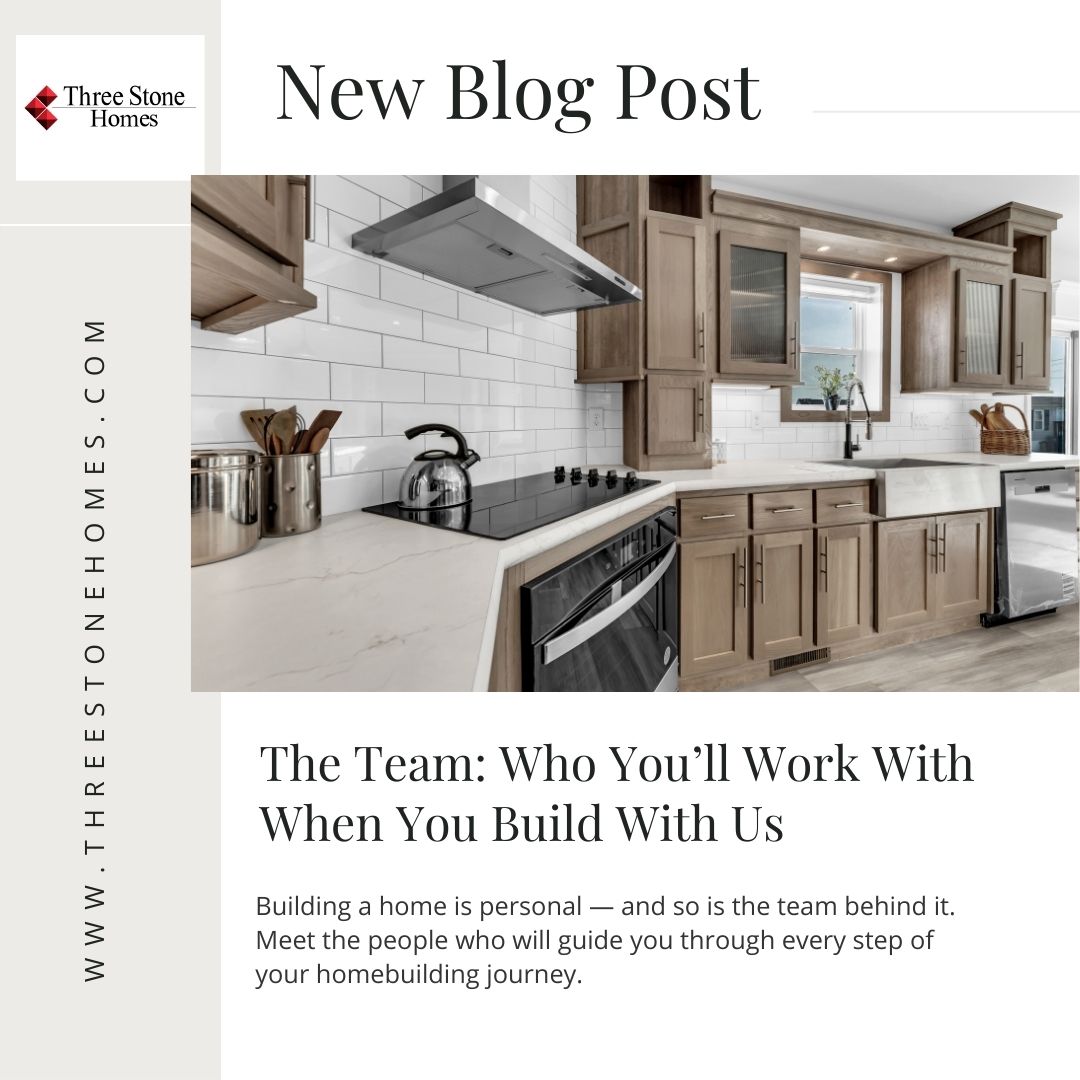
Building a Home Is a Team Effort
When you choose to build a home, you’re not just selecting a floor plan — you’re choosing the people who will guide you through one of the biggest decisions of your life. At Three Stone Homes, we believe the homebuilding experience should feel personal, clear, and supported every step of the way.
Behind every home we build is a dedicated team working together to make the process smooth, transparent, and enjoyable.
Here’s who you’ll work with when you build with us.
Your First Point of Contact & Home Specialists
From your first visit to our display center through choosing the right home, you’ll work with knowledgeable team members who are here to listen, answer questions, and guide you through your options.
Our home specialists help you:
- Tour models and floor plans
- Understand modular and manufactured home options
- Talk through budget considerations
- Choose a layout that fits your lifestyle and timeline
- Understand standard features and available upgrades
This stage is all about clarity, confidence, and support — never pressure.
Project Coordination & Build Support
Behind the scenes, our project coordination team helps keep everything moving forward. They work with manufacturers, contractors, and inspectors to ensure your home stays on track.
This includes:
- Coordinating timelines
- Managing delivery and setup logistics
- Supporting site prep and foundation coordination
- Helping ensure quality standards are met
You don’t have to manage the process alone — our team helps connect all the moving pieces.
Ongoing Support & Communication
Building a home doesn’t end with delivery. Our team remains available to answer questions, provide guidance, and support you as you move into your new home.
We believe strong communication builds strong trust — and that trust is at the heart of every successful project.
Why Our Team Approach Matters
Working with a local builder means you’re not handed off to a call center or left guessing who to contact. You’ll work with real people who know your project, understand your goals, and care about your experience.
At Three Stone Homes, our team approach means:
- Clear communication
- Consistent guidance
- Local knowledge
- A relationship that lasts beyond move-in day
Final Thoughts
Your home is more than a structure — it’s where life happens. That’s why the people you work with matter just as much as the home you choose.
At Three Stone Homes, our team is proud to walk alongside you from your first visit to move-in day and beyond.
Visit our display centers in Rogersville or Harrisonville to meet our team and start your homebuilding journey with confidence.
.jpg)
Buying a Home Is Exciting — But Preparation Matters
Buying or building a home is a major milestone, and while it’s an exciting process, it’s also one where small assumptions can lead to big surprises. Many homebuyers make the same mistakes—not because they’re careless, but because they simply don’t know what to ask yet.
The good news? Most of these issues are completely avoidable with the right information and guidance. Here are some of the most common homebuying mistakes we see—and how you can avoid them.
Mistake #1: Assuming Any Land Is Ready to Build On
One of the biggest misconceptions buyers have is believing that owning land automatically means it’s build-ready.
In reality, land may require:
- Clearing or grading
- Soil testing
- Utility access
- Driveway or delivery access
- Foundation preparation
How to avoid it:
Before purchasing land—or committing to a home—have the property evaluated for build readiness. A builder can help identify potential red flags early, saving time and unexpected costs later. At Three Stone, we will conduct a site check for you.
Mistake #2: Overlooking Zoning & Local Requirements
Zoning regulations vary widely and can impact what type of home you’re allowed to place on a property. Some areas restrict home types, require minimum square footage, or have specific foundation rules.
How to avoid it:
Always verify zoning and local building requirements before moving forward. A quick check can prevent costly delays or the need to change plans entirely.
Mistake #3: Underestimating Site Prep Costs
Site preparation is one of the most commonly underestimated parts of the homebuying process. Buyers often budget for the home itself but forget to account for:
- Foundation work
- Utility installation
- Septic or well systems
- Driveways and access
- Permits and inspections
How to avoid it:
Three Stone can help provide clear breakdown of site prep requirements early. Understanding these costs upfront allows you to budget accurately and avoid financial stress later.
Mistake #4: Thinking All Homes Are Built the Same Way
Not all homes are constructed the same, and misunderstanding the differences between modular, manufactured, and site-built homes can lead to confusion about timelines, financing, and requirements.
How to avoid it:
Ask questions and educate yourself on how different home types are built, inspected, and financed. Understanding the process helps set realistic expectations from day one.
Mistake #5: Rushing Decisions to “Move Faster”
It’s natural to want to move quickly—but rushing decisions on floor plans, upgrades, or land selection can lead to regret down the road.
How to avoid it:
Take time to think through how you’ll live in the home long-term. Consider future needs, storage, layout flow, and lifestyle changes before finalizing decisions.
Mistake #6: Not Working With the Right Team
Trying to manage land purchase, site prep, zoning, and construction alone can be overwhelming. Without experienced guidance, it’s easy to miss important details.
How to avoid it:
Work with a builder who understands the full process and can guide you from start to finish. At Three Stone Homes, our team helps buyers navigate zoning questions, evaluate land readiness, understand site prep requirements, and coordinate next steps—so nothing gets overlooked. Having a knowledgeable team in your corner makes the journey smoother, clearer, and far less stressful.
Final Thoughts
Most homebuying mistakes don’t come from bad decisions — they come from missing information. With the right preparation, questions, and support, you can avoid common pitfalls and enjoy a smoother, more confident path to homeownership.
At Three Stone Homes, we help buyers navigate zoning, land, site prep, and the entire building process so there are no surprises along the way.
Thinking about buying or building a home? Visit our Rogersville or Harrisonville display centers to talk with our team and get started the right way.
.jpg)
A Closer Look at Modular Construction
When people hear “modular home,” many imagine shortcuts, assembly-line homes, or something temporary. In reality, modular construction is one of the most precise, controlled, and quality-driven building methods available today.
Let’s take you behind the scenes to see exactly how modular homes are built — and why the process is one of the biggest advantages for today’s homebuyers.
Step 1: Built Indoors — Not in the Weather
Unlike traditional site-built homes, modular homes are constructed inside a climate-controlled factory. This means materials are protected from rain, snow, extreme temperatures, and moisture during construction.
Building indoors helps prevent warping, delays, and damage while allowing crews to work efficiently year-round. The result is a more consistent build timeline and better material integrity from the start.
Step 2: Precision Framing & Structural Strength
Each section of a modular home is framed with the same materials used in traditional site-built homes — and often with added reinforcement.
Because modular sections must be transported and lifted into place, they’re engineered to handle movement and weight. This frequently results in tighter framing, stronger connections, and increased structural stability over time.
Myth busted: Modular homes are not weaker — they’re often built stronger.
Step 3: Electrical, Plumbing & HVAC Installed Early
In the factory, electrical wiring, plumbing, insulation, and HVAC systems are installed before walls are closed. This allows for cleaner installation, better quality control, and easier inspections.
Each system is tested during construction rather than rushed at the end of the build, helping ensure everything functions as it should.
Step 4: Interior Finishes Completed in the Factory
Once major systems are in place, interior finishes begin. This includes drywall, cabinetry, flooring, trim, paint, and fixtures.
Because all of this work happens indoors, finishes are protected from dirt, moisture, and temperature fluctuations, helping them look better and last longer.
Step 5: Multiple Quality Inspections
Modular homes go through multiple inspections during the build process, not just one final check.
These inspections typically cover structural integrity, electrical and plumbing compliance, energy efficiency, and building code requirements. By the time a home leaves the factory, it has already passed rigorous quality standards.
Step 6: Delivery & On-Site Assembly
After construction is complete, the home sections are carefully transported to the site. A crane sets each section onto the prepared foundation, where crews secure and seal everything together.
On-site work includes joining the sections, connecting utilities, completing exterior details, and conducting final inspections. From there, the home is ready for move-in.
Why This Process Matters
The modular construction process offers several clear advantages:
- Faster build timelines
- Fewer weather-related delays
- Higher consistency and quality control
- Stronger structural design
- No compromise on comfort or style
Final Thoughts
Modular homes aren’t a shortcut — they’re a smarter way to build. The factory construction process allows for precision, efficiency, and quality that’s difficult to achieve with traditional on-site building alone.
At Three Stone Homes, we proudly partner with trusted manufacturers to deliver homes that are thoughtfully built, carefully inspected, and designed to last.
Ready to see the quality for yourself? Visit our display centers in Rogersville or Harrisonville to tour our modular homes in person.
.jpg)
Do Modular Homes Hold Their Value? Myths vs Reality
It’s one of the most common questions we hear: “Will a modular home appreciate in value like a traditional home?”
The short answer? Yes — when properly built, maintained, and located, modular homes can hold and even increase in value just like site-built homes.
But misconceptions still linger. Let’s clear up the biggest myths and uncover the real facts about modular home value.
Myth #1: Modular Homes Are the Same as Mobile Homes
This is the most common misunderstanding. Modular homes are not the same as manufactured or mobile homes.
- Modular homes are built in sections in a factory, then assembled on a permanent foundation and must meet the same local and state building codes as traditional homes.
- Manufactured/mobile homes are built to HUD code and placed on a chassis for transport.
Because modular homes meet the same construction standards as site-built homes, they’re appraised, financed, and insured the same way—and they can appreciate in value accordingly.
Myth #2: Modular Homes Don’t Appreciate Like Traditional Homes
Modern modular homes are designed and built to last. They often use the same materials—or higher quality materials—than site-built homes, including 2x6 walls, energy-efficient insulation, and premium finishes.
When placed on owned land and maintained over time, modular homes typically appreciate in line with other homes in the same area.
Reality: The biggest factors affecting value are location, upkeep, and the local housing market—not whether a home was built modular or onsite.
Myth #3: Buyers Won’t Want a Modular Home Later
Today’s modular homes are virtually indistinguishable from traditional builds. Open floor plans, high-end kitchens, vaulted ceilings, and designer finishes make them appealing to a wide range of buyers.
With growing awareness of modular construction’s quality, speed, and efficiency, resale demand continues to rise. In many areas, modular homes are now viewed as a smart, forward-thinking choice.
Myth #4: Modular Homes Are “Temporary” or Less Durable
Quite the opposite. Because modular homes are built indoors and must withstand transportation and placement, they’re often built stronger than traditional homes.
They use advanced framing systems and precision assembly that minimize human error and reduce weather-related damage during construction. The result: a home built to last for decades.
The Reality: A Smart Long-Term Investment
When properly maintained and located on owned property, modular homes hold their value just like any other home. Many homeowners even see appreciation over time — especially when local housing markets are strong.
With modern design options, efficient materials, and the same appraisals and financing standards, modular homes are a smart, stable investment for today’s buyers.
Final Thoughts
The myth that modular homes lose value simply doesn’t hold up anymore. These homes are built to the same codes, use the same materials, and provide the same lasting comfort as traditional homes — often with better energy performance and shorter build times.
At Three Stone Homes, we take pride in building high-quality modular and manufactured homes that are designed to last, appreciate, and provide long-term value for families across the region.
Ready to see the difference for yourself? Visit our model centers in Rogersville or Harrisonville to explore our latest homes and learn more about today’s modular options.
%20(260%20x%20260%20px)%20(1).jpg)
Meet Santa & Mrs. Claus at Three Stone Homes – December 13th!
Free Family Event in Rogersville
The holiday season is officially here, and we’re excited to welcome Santa Claus and Mrs. Claus to our Rogersville model home for a festive, family-friendly celebration!
Mark your calendars for Saturday, December 13th from 1-4 pm, and bring the whole family for a cheerful afternoon filled with holiday magic, sweet treats, and unforgettable memories.
What to Expect
Families are invited to stop by any time during the event between 1-4pm for a relaxed, come-and-go experience. No long lines or rushed moments—just simple, joyful holiday fun.
Here’s what you can enjoy during your visit:
- Meet & Greet with Santa & Mrs. Claus
Kids can share their Christmas wishes and interact with Santa in a cozy, welcoming setting.
- Free Festive Photos
Snap your own cheerful pictures with Santa to capture the moment (perfect for holiday cards!).
- Cocoa & Cookie Treats
Warm up with complimentary hot chocolate and a holiday cookie while you tour our decorated model home.
- Family-Friendly Atmosphere
Enjoy a relaxed event that’s perfect for young children, parents, grandparents, and anyone looking to get into the holiday spirit.
Supporting the Community
This year, we’re collecting donations for Ozarks Food Harvest to help local families in need during the holiday season.
If you’re able, please bring a non-perishable food item to contribute. Every donation makes a meaningful difference for our neighbors.
Event Location
Three Stone Homes – Rogersville
7575 US Hwy 60, Rogersville, MO
Stop in any time during the event, enjoy the festivities, and feel free to explore our model homes while you’re here!
We Can’t Wait to Celebrate With You
Whether you’re bringing a little one to meet Santa for the first time, grabbing a sweet treat with friends, or simply getting into the holiday spirit, this event is open to all. We look forward to welcoming you!
.jpg)
Building a Home Is Personal
Buying or building a new home is one of life’s biggest investments—financially and emotionally. It’s about more than square footage or finishes; it’s about finding a team who understands your vision, your lifestyle, and your community.
That’s why choosing a local builder you can trust matters so much. The right partnership can make the process smoother, more transparent, and ultimately more rewarding.
Here’s why working with a local builder can make all the difference.
- Local Builders Know the Area
From soil types to zoning laws to neighborhood trends, local builders understand the details that affect your home’s construction and long-term value. They know what works for your region’s climate, codes, and communities, ensuring your home is built to last in the environment you live in.
Plus, local builders often have strong relationships with area suppliers and trades, helping your project stay on schedule and within budget.
- Personalized Service & Better Communication
When you work with a local builder, you’re not just a number on a spreadsheet. You’re a neighbor.
Local builders are more accessible, responsive, and involved. You can walk into their office, meet the team in person, and get updates directly from someone who knows your project inside and out. That personal connection builds trust—and that trust makes the building process far less stressful.
- Reputation Matters (and They Stand Behind Their Work)
Local builders rely on word-of-mouth and community reputation far more than national companies do. Every project is a reflection of their name and their values.
That means they’re more likely to go the extra mile for quality, customer satisfaction, and long-term relationships—because their success depends on it.
When you choose a trusted local builder, you’re choosing a partner who’s invested in your experience before, during, and after move-in.
- Long-Term Support You Can Count On
If you ever have questions or need service after closing, a local builder is just down the road—not in another state. That proximity gives you peace of mind, knowing the team who built your home will be there if you need them.
Local builders value lasting relationships—and that commitment doesn’t end when you get your keys.
- Your Investment Stays in the Community
Working with a local builder means you’re supporting local jobs, businesses, and families. The materials they source, the subcontractors they hire, and the taxes they pay all help strengthen your community.
It’s not just about building a home—it’s about building local growth and stability, too.
Final Thoughts
Choosing who builds your home is one of the most important decisions you’ll make. When you work with a local builder you can trust, you gain more than a home—you gain a team that cares about your satisfaction, your neighborhood, and your future.
At Three Stone Homes, we’re proud to serve our local communities with integrity, craftsmanship, and personalized care. From first tour to final walkthrough, our team is here every step of the way—because homebuilding should always feel personal.
Visit our display centers in Rogersville or Harrisonville to meet our team and see why local expertise matters.
.jpg)
The Rent Cycle: Paying More, Owning Less
For many Missourians, monthly rent prices have climbed while space and stability shrink. You pay every month—but that money doesn’t build equity, value, or ownership. In most cases, renting simply covers someone else’s mortgage.
If you’re ready to break that cycle, buying a modular home can be a surprisingly affordable and smart alternative.
- Lower Monthly Costs Than You Might Expect
Modular homes are often priced well below traditional site-built homes, making homeownership achievable for more families. Because they’re built efficiently in a controlled environment, construction costs stay lower—and those savings pass directly to you.
In many areas, your monthly mortgage payment for a modular home can be equal to—or even less than—local rent.
- You’re Building Equity, Not Just Paying Rent
Every mortgage payment adds to your investment in a real asset—your home. Over time, that equity builds value and gives you long-term financial stability. Rent, on the other hand, offers no return.
When you buy a modular home, you’re not just finding a place to live—you’re creating an asset that grows with you.
- Stable Payments, No Surprise Rent Hikes
Rent can increase every year. Mortgage payments, especially with a fixed-rate loan, stay consistent, helping you plan your budget with confidence. You’ll never have to worry about a landlord raising the rent or selling the property out from under you.
- Customization & Pride of Ownership
When you own a modular home, you can personalize it—choose your finishes, add features, decorate your way. Renting limits your freedom, but owning gives you the space (and satisfaction) to truly make it your own.
- Energy Efficiency = Long-Term Savings
Today’s modular homes are designed with energy-efficient construction, insulation, and windows that help lower utility costs. That means you’ll not only save money month to month—you’ll enjoy a more comfortable, sustainable home for years to come.
- Resale Value & Long-Term Investment
Modern modular homes are built to meet or exceed local building codes, often maintaining their value just like traditional homes. Whether you stay for five years or fifteen, you’ll have the advantage of owning an appreciating asset instead of a stack of rent receipts.
Final Thoughts
If you’re renting and dreaming of something permanent, now is the time to explore your options. Modular homes offer the same quality and comfort as site-built homes, often at a lower price point—with faster build times and customizable designs.
At Three Stone Homes, we help families make the leap from renting to owning every day. Our team will guide you through financing, floor plans, and everything in between—so you can start investing in yourself, not your landlord.
👉 Visit our display centers in Rogersville or Harrisonville today to explore models and discover how affordable homeownership can be.
.jpg)
Manufactured vs. Modular vs. Site Built Homes: What's the Difference?
When you’re shopping for a new home, the choices can feel overwhelming. Terms like manufactured, modular, and site-built get used a lot, but what do they really mean—and which is right for you? At Three Stone Homes, we believe an informed buyer is a confident buyer. Let’s break it down.
Site-Built Homes
Definition: Traditional homes constructed entirely on the property lot. All materials are delivered to the site, and the home is built from the ground up.
Pros:
- Wide range of customization options
- Often holds higher long-term resale value
- Familiar to most buyers and lenders
Cons:
- Typically more expensive upfront
- Longer construction timelines (weather and labor delays are common)
- Higher cost of maintenance and utilities compared to newer housing innovations
Modular Homes
Definition: Homes built in sections (modules) inside a factory, then transported to the site and assembled on a permanent foundation. They must meet the same local building codes as site-built homes.
Pros:
- Faster build time compared to site-built
- Meets the same codes and standards
- Can look and function just like a traditional home
Cons:
- Limited customization compared to fully site-built
- Availability may depend on local zoning regulations
- Slightly higher upfront costs than manufactured homes
Manufactured Homes
Definition: Factory-built homes constructed according to federal HUD standards, then transported to their site. They can be placed on private land, in communities, or on a permanent foundation.
Pros:
- Most affordable homeownership option
- Efficient build process means lower costs and less waste
- Modern designs rival site-built homes in comfort and style
- Financing options are more available than ever
Cons:
- Zoning restrictions may apply depending on the area
- Some buyers may face lingering misconceptions about quality (though today’s models are stronger and more energy-efficient than ever)
So, Which One Is Right for You?
- If you want affordable comfort and modern features : Manufactured Home
- If you want speed + code compliance similar to site-built : Modular Home
- If you want full customization and don’t mind higher costs/timelines: Site-Built Home
At Three Stone Homes, we specialize in providing high-quality manufactured and modular homes that blend comfort, style, and value. Our display models in Rogersville, MO let you walk through and see the difference for yourself.
Ready to explore your options? Let’s make your dream of homeownership a reality!